Acne vulgaris remains one of the most prevalent dermatological disorders globally and is the most common skin complaint in patients with ethnic skin. Although the pathogenic factors leading to acne vulgaris are similar in all Fitzpatrick skin phototypes, there are conflicting reports as to whether certain characteristics, such as sebum production and sebaceous gland size, differ in people with ethnic skin. While the same clinical lesions occur in all patients, acne in ethnic skin is associated with a much greater degree of inflammation, even within lesions previously thought of as ‘non-inflammatory’. The heightened inflammatory response, combined with other characteristics of ethnic skin, leads to more persistent hyperpigmentation and severe scarring.
Acne vulgaris is an inflammatory occlusive disorder of the pilosebaceous unit. It is one of the most common dermatological conditions seen globally, affecting approximately 40–50 million individuals in the USA alone. It is estimated that 17–40% of individuals with acne consult either a GP or dermatologist, and acne is reported as one of the most frequent reasons for people seeking healthcare advice. It is the leading cause of dermatological disease among all Fitzpatrick skin phototypes, and the most prevalent of the top five most common skin conditions among patients with black skin, followed by eczema and pigmentary disorders.
Among Latinos, Asian patients in Singapore, Native and Arab Americans, as well as the native populations of Hong Kong, Peru, and South Africa, acne has been cited as one of the most widespread skin conditions seen. A 2014 study of 6,664 patients with black skin in Durban, South Africa, showed there to be a 44.3% prevalence rate of acne.
In addition, while acne is common in all race groups and both genders, a large 2010 American study in females showed the prevalence of acne to be much higher in people with ethnic skin, occurring in 37% of black patients, 32% of Hispanics, 30% of Asians, and only 24% of Caucasians.
For the purposes of this discussion, we will define ethnic skin as Fitzpatrick skin types IV, V, and VI or the so-called darker-skinned, non-Caucasian subjects. This category includes patients of Asian descent (Japan, China, India, Pakistan, Sri Lanka, Malaysia, Singapore, and Indonesia), patients with African ancestry (African, Afro-Caribbean, African American), and Hispanic populations. Ethnic, black, and skin of colour will be terms used interchangeably.
The importance of acne as a dermatological problem is highlighted by its negative effect on quality of life (QoL) in affected subjects. In a large QoL study, Hispanic and Asian patients had a greater decline in QoL than Caucasian acne sufferers in the domains of self-esteem and social roles. The poorer QoL was possibly as a result of patients’ perceptions in their cultural context. A 2005 South African study by Mosam et al. showed that acne vulgaris led to significant psychological distress and poor overall QoL in people with ethnic skin.
The latest data from the United Nations states that ‘among the ten most populous countries in the world, only two currently have a majority population of Europeans (USA and Russian Federation). The most populous countries in the world are in Africa (Nigeria), Asia (Bangladesh, China, India, Indonesia, and Pakistan), and Latin America (Brazil and Mexico)’. Indeed, 80% of the world’s population has pigmented skin.
The path to acne vulgaris in all ethnic groups is the same, being a multifactorial process. It begins with the formation of a microcomedone, which is a result of follicular plugging from desquamated keratinocytes in the pilosebaceous unit. A macrocomedone follows due to increased accumulation of sebum and keratinocytes. Increasing inflammation leads to papules, pustules, nodules, and cysts. Hormonal stimulation by oestrogen and androgens increases sebum production throughout the acne process. Propionobacterium acnes within the pilosebaceous unit thrives in a lipophilic environment caused by sebum accumulation. It incites an inflammatory response by stimulating cytokine secretion within macrophages and from follicular keratinocytes.
It has been shown that there is a greater density of P. acnes in black compared with white skin. Genetic factors may also play a significant role in acne pathogenesis. While the same acne pathway exists in both ethnic and Caucasian skin, controversy remains as to whether differences exist between certain inherent characteristics of skin among the different skin types. However, it has been shown that black hair has a slightly higher lipid content than Caucasian hair. It has been suggested that there are differences in sebaceous gland size and activity in ethnic skin; although, studies on the subject are few and have yielded contradictory results. It is thus unknown if darker skins have larger sebaceous glands or if they produce more or equal amounts of sebum than Caucasian skin does. Further research is required to reach a definitive conclusion.
Certain aetiological agents have been implicated in the different patterns and incidences of acne in ethnic skin.
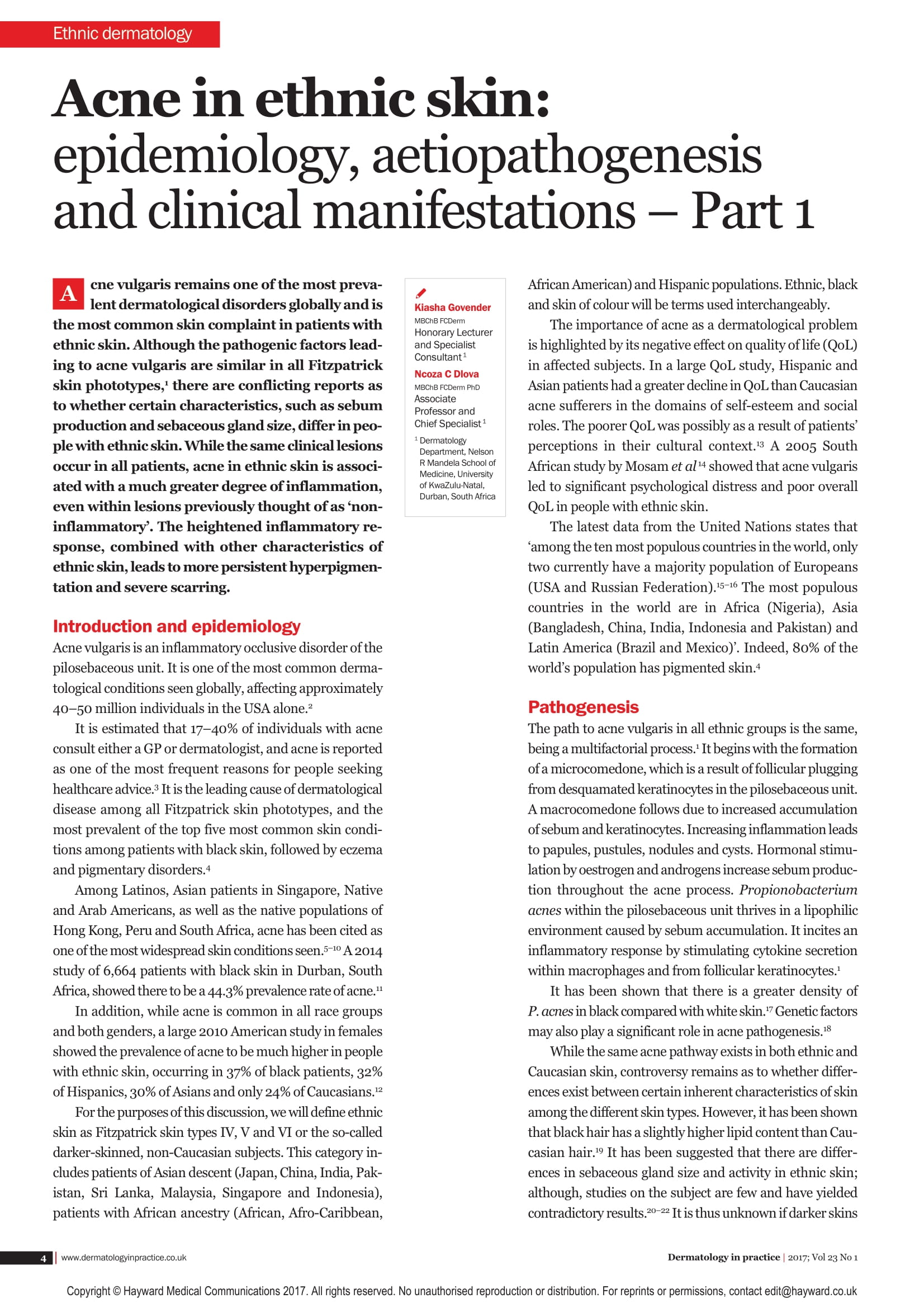
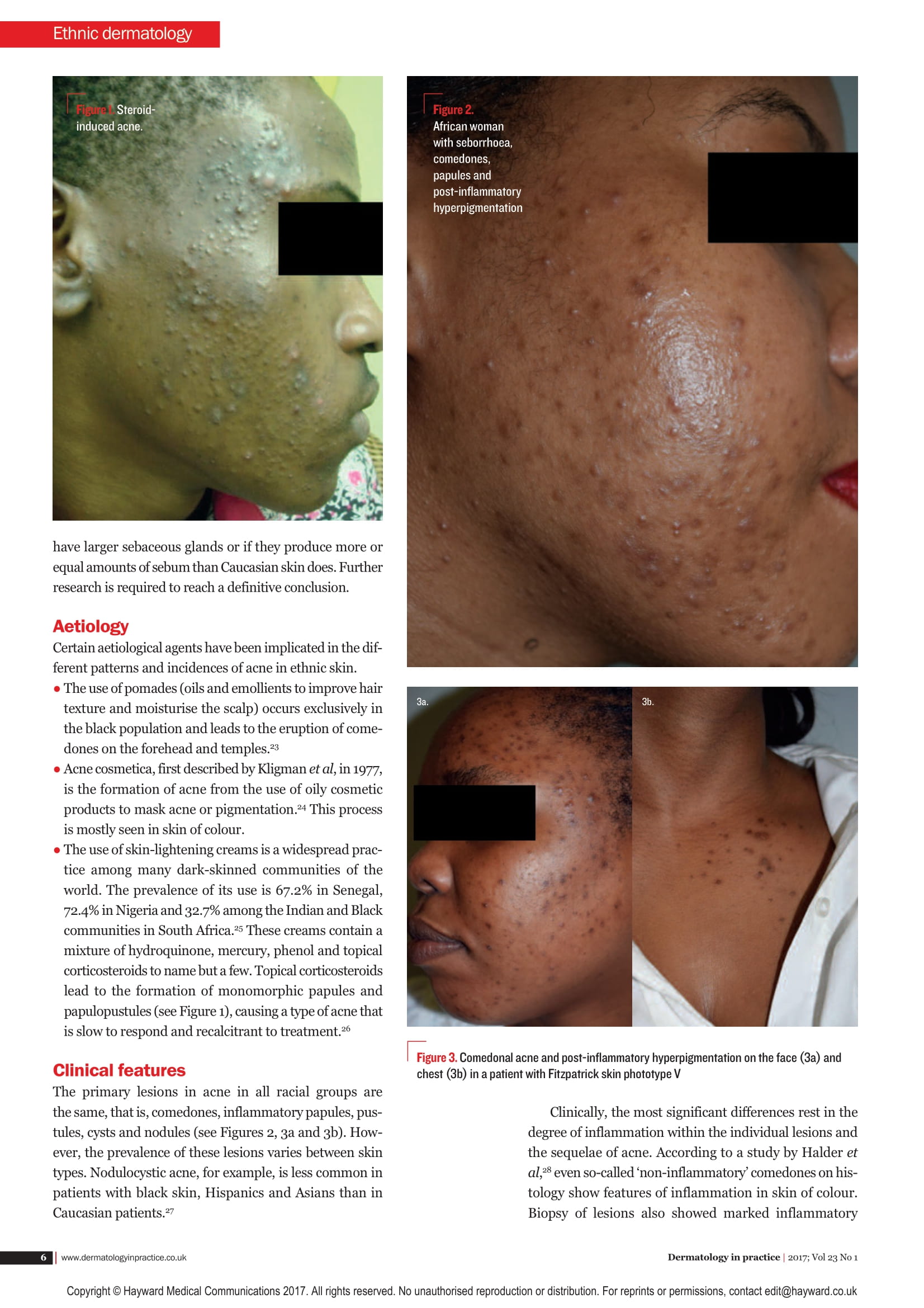
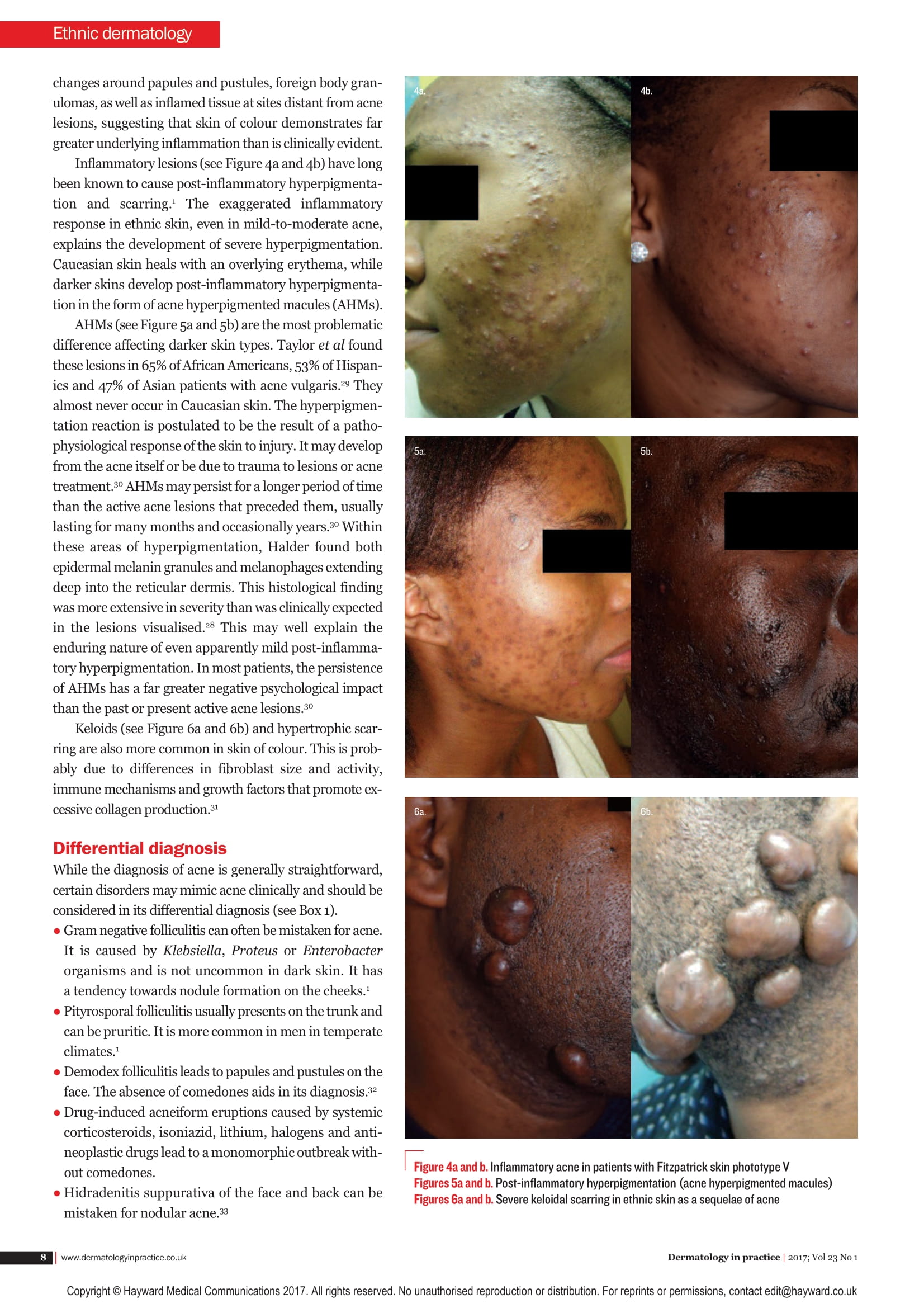
The primary lesions in acne in all racial groups are the same, that is, comedones, inflammatory papules, pustules, cysts, and nodules. However, the prevalence of these lesions varies between skin types. Nodulocystic acne, for example, is less common in patients with black skin, Hispanics, and Asians than in Caucasian patients.

Clinically, the most significant differences rest in the degree of inflammation within the individual lesions and the sequelae of acne. According to a study by Halder et al, even so-called ‘non-inflammatory’ comedones on histology show features of inflammation in skin of colour. Biopsy of lesions also showed marked inflammatory changes around papules and pustules, foreign body granulomas, as well as inflamed tissue at sites distant from acne lesions, suggesting that skin of colour demonstrates far greater underlying inflammation than is clinically evident.
Inflammatory lesions have long been known to cause post-inflammatory hyperpigmentation and scarring. The exaggerated inflammatory response in ethnic skin, even in mild-to-moderate acne, explains the development of severe hyperpigmentation. Caucasian skin heals with an overlying erythema, while darker skins develop post-inflammatory hyperpigmentation in the form of acne hyperpigmented macules (AHMs).

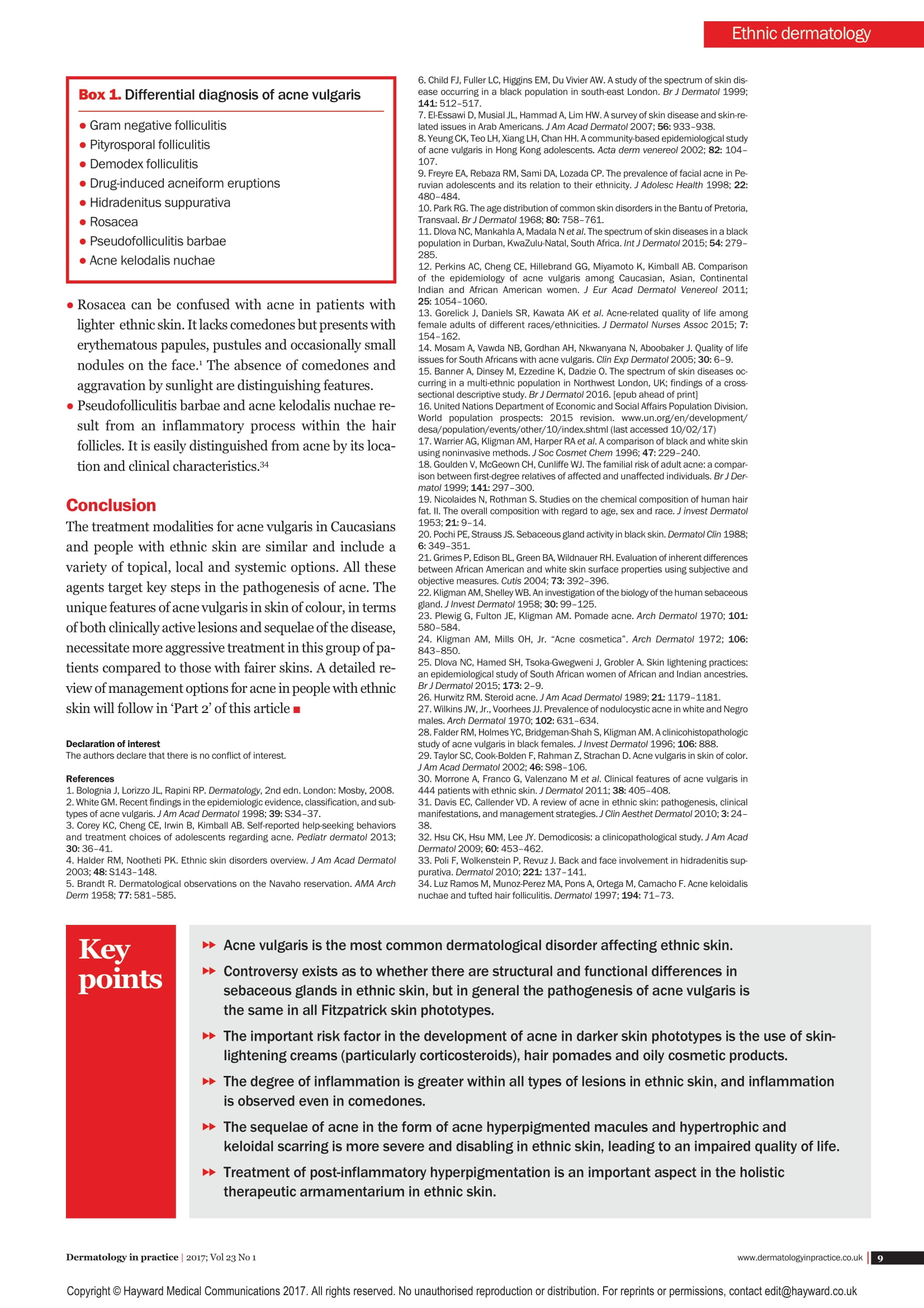
AHMs are the most problematic difference affecting darker skin types. Taylor et al found these lesions in 65% of African Americans, 53% of Hispanics, and 47% of Asian patients with acne vulgaris. They almost never occur in Caucasian skin. The hyperpigmentation reaction is postulated to be the result of a pathophysiological response of the skin to injury. It may develop from the acne itself or be due to trauma to lesions or acne treatment. AHMs may persist for a longer period of time than the active acne lesions that preceded them, usually lasting for many months and occasionally years. Within these areas of hyperpigmentation, Halder found both epidermal melanin granules and melanophages extending deep into the reticular dermis. This histological finding was more extensive in severity than was clinically expected in the lesions visualised. This may well explain the enduring nature of even apparently mild post-inflammatory hyperpigmentation. In most patients, the persistence of AHMs has a far greater negative psychological impact than the past or present active acne lesions.
Keloids and hypertrophic scarring are also more common in skin of colour. This is probably due to differences in fibroblast size and activity, immune mechanisms, and growth factors that promote excessive collagen production.
While the diagnosis of acne is generally straightforward, certain disorders may mimic acne clinically and should be considered in its differential diagnosis.
The treatment modalities for acne vulgaris in Caucasians and people with ethnic skin are similar and include a variety of topical, local, and systemic options. All these agents target key steps in the pathogenesis of acne. The unique features of acne vulgaris in skin of colour, in terms of both clinically active lesions and sequelae of the disease, necessitate more aggressive treatment in the group of patients compared to those with fairer skins. A detailed review of management options for acne in people with ethnic skin will follow in 'Part 2' of this article.
Declaration of Interest: The authors declare that there is no conflict of interest.
References:
Key Points: